
Why Enclosed Storage for Winter Makes Sense (And When It’s Worth It)
Why Enclosed Storage for Winter Makes Sense (And When It’s Worth It)
Bargain Storage
February 23rd, 2026
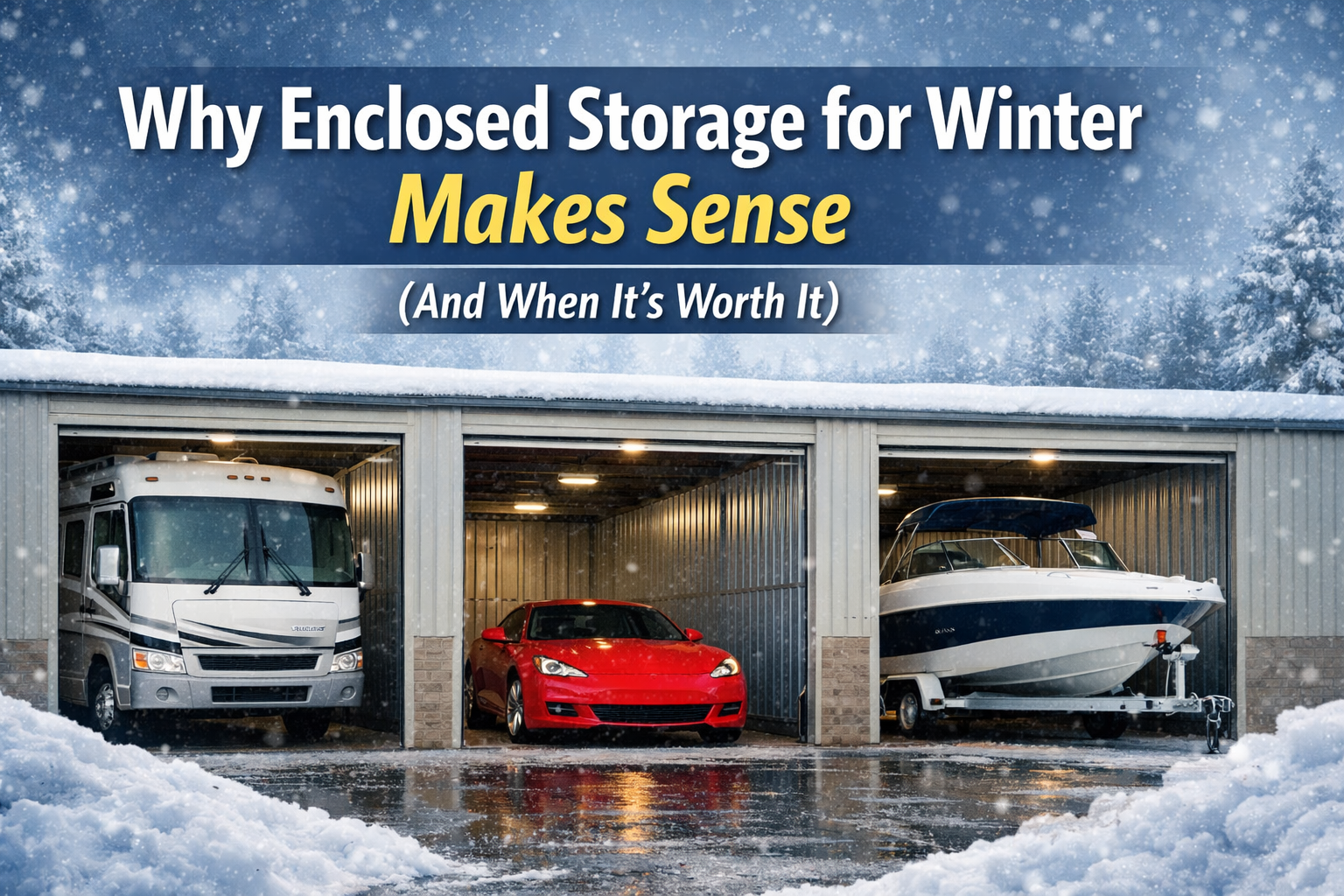
Winter is tougher on RVs, boats, and specialty vehicles than most owners realize. Freezing temperatures, moisture buildup, wind exposure, and constant temperature swings don’t just create surface issues, they quietly attack roof seals, plumbing systems, batteries, tires, wiring, and finishes. That’s why more owners begin researching enclosed storage for winter before parking their rig for the season. When an RV or boat sits exposed for months, small vulnerabilities can turn into expensive spring repairs.
Enclosed storage for winter provides a controlled, fully protected environment that shields vehicles from precipitation, humidity, UV damage, and security risks. For RVs and boats in particular, protection isn’t just about paint, it’s about safeguarding plumbing systems, electrical components, interior materials, and structural seals. That said, not every vehicle requires the highest level of protection. The smart decision comes down to storage duration, vehicle value, climate conditions, and your tolerance for risk. Knowing when enclosed storage is truly worth it, and when covered storage may be sufficient, allows you to protect your investment without overspending.
For RV owners in Arizona and North Texas specifically seeking fully enclosed RV storage units with drive-up access and enhanced indoor protection, select Carefree Covered RV Storage locations offer purpose-built enclosed RV garages designed for long-term winter vehicle storage.
What Happens to Vehicles When They’re Stored Outside in Winter?
Vehicles stored outdoors during winter are exposed to constant temperature swings, moisture, and wind. Over time, this can lead to:
- Battery drain and electrical issues
- Rust on brakes, frames, and undercarriages
- Cracked hoses, seals, and belts
- Faded paint and brittle trim from sun exposure
- Mold or mildew forming inside the vehicle
Even when a vehicle isn’t being driven, winter exposure continues to take a toll.
What Is Enclosed Storage and How Is It Different?
Enclosed storage places your vehicle or belongings inside a fully walled, individually secured unit rather than under a canopy or in an open parking lot. Instead of being partially exposed to the elements, your RV, boat, car, or trailer is protected on all sides — including the roof and entry points — creating a barrier between your investment and winter conditions.
Unlike outdoor storage, which leaves vehicles exposed to rain, snow, wind, and temperature swings, enclosed storage significantly reduces direct moisture exposure and debris accumulation. And unlike covered storage, which primarily shields against overhead sun and precipitation but leaves the sides open, enclosed storage offers complete structural protection. That difference becomes especially important during winter, when wind-driven moisture, condensation, and freezing temperatures can cause damage even if a vehicle is parked under a canopy.
Enclosed storage also provides enhanced security. With solid walls, lockable doors, and restricted access points, vehicles are less visible and less accessible than those stored outdoors. For high-value RVs, boats with advanced electronics, or specialty vehicles, that added layer of privacy and protection matters. From a practical standpoint, enclosed storage creates a more stable environment. While most units are not climate-controlled, the enclosed structure helps buffer extreme temperature swings and reduces prolonged exposure to humidity. That means less stress on batteries, rubber seals, plumbing systems, wiring, and interior materials. In short, enclosed storage isn’t simply “covered parking.” It’s a fully protected storage solution designed to reduce environmental wear, improve security, and preserve vehicle condition during the months when it’s not being used.
Why Enclosed Storage Is Ideal for Storing Vehicles in Winter
1. Cars, Trucks, and Specialty Vehicles
Vehicles with sensitive electronics, custom finishes, or limited winter use benefit from the stable environment of enclosed storage. Paint, rubber components, and interiors stay protected until spring.
2. RVs and Travel Trailers
RVs face unique winter risks. Roof seals, plumbing systems, slide-outs, tires, and exterior finishes all degrade faster when exposed to moisture, freezing temperatures, and temperature swings. Enclosed storage keeps RVs dry, shaded, and secure during off-season months, significantly reducing environmental wear.
For RV owners specifically looking for fully walled, drive-up enclosed RV storage, Carefree Covered RV Storage currently offers enclosed RV storage at:
These purpose-built enclosed RV units provide four-wall protection, roll-up door access, enhanced security, and a more stable storage environment ideal for long-term winter RV storage.
3. Boats and Trailers
Even winterized boats suffer from moisture intrusion and UV exposure. Enclosed storage helps preserve hulls, wiring, and mechanical components.
When Is Enclosed Storage Worth the Cost?
Enclosed storage makes sense when:
- The vehicle has high financial or sentimental value
- Storage will last several months or longer
- The vehicle contains electronics, plumbing, or interior finishes
- Security is a top concern
- Repair or replacement costs would be significant
In many cases, enclosed storage costs less than fixing winter-related damage later.
When Enclosed Storage May Not Be Necessary
Enclosed storage may be unnecessary if:
- Storage is very short-term
- The item is weather-resistant and low value
- The vehicle is used frequently during winter
- Covered storage provides adequate protection
Choosing the right option depends on usage, value, and risk tolerance.
Enclosed vs Covered vs Outdoor Storage: Which Is Best for Winter?
STORAGE TYPE WEATHER PROTECTION SECURITY BEST FOR WINTER VEHICLES
Enclosed Storage Excellent Highest Yes
Covered Storage Moderate Medium Sometimes
Outdoor Storage Minimal Lowest RarelY
If winter protection and peace of mind are priorities, enclosed storage is the clear winner.
Winter Vehicle Storage at Bargain Storage
If you’re storing a motorhome in the Phoenix metro area or North Texas and want maximum winter protection, explore enclosed RV storage availability at our Chandler L-202, Chandler I-10, or St. Paul locations for fully enclosed garage-style RV storage.
Protect your investment this season with enclosed storage for winter — without paying for more than you need.
At Bargain Storage, our enclosed storage for winter is designed to shield cars, RVs, boats, and work trailers from harsh weather, moisture buildup, and security risks. Fully walled units provide superior protection compared to outdoor or covered options, helping reduce the wear and damage that often shows up in spring.
Whether you’re storing a travel trailer for the off-season, parking a boat until warmer weather returns, or securing a vehicle that won’t be driven for several months, enclosed storage for winter offers peace of mind and long-term value.
Not sure if it’s the right fit? Our team will walk you through your options and help you choose the level of protection that makes financial sense — not simply the most expensive upgrade.
Explore available units or contact your local Bargain Storage facility today to reserve enclosed storage for winter before seasonal demand fills remaining spaces.
Final Takeaway
Enclosed storage for winter isn’t about luxury. It’s about preventing avoidable damage during the most punishing months of the year. When vehicles sit exposed to cold, moisture, and temperature swings, small issues can quickly turn into expensive repairs.
For long-term storage, high-value vehicles, or RVs and boats with sensitive systems, enclosed storage for winter delivers superior protection, stronger security, and meaningful long-term savings. And in many cases, the cost of prevention is far less than the cost of repair.
If your vehicle will be parked for the season, choosing the right level of protection now can save you money and headaches later.
Frequently Asked Questions About Enclosed Storage for Winter
Is enclosed storage for winter worth the extra cost?
For long-term vehicle storage, enclosed storage for winter is often worth the investment. It prevents moisture damage, battery drain, rust formation, and UV deterioration. In many cases, the cost of enclosed storage is significantly less than repairing winter-related damage in spring.
What types of vehicles benefit most from enclosed storage for winter?
Vehicles that benefit most include:
- RVs and travel trailers
- Boats and trailers
- Classic or specialty vehicles
- Vehicles with sensitive electronics or custom finishes
If a vehicle will sit unused for several months, enclosed storage for winter provides the highest level of protection.
Is covered storage enough for winter?
Covered storage protects against sun and some precipitation, but it does not fully prevent moisture intrusion, wind exposure, or temperature swings. For mild climates or short-term storage, covered storage may be sufficient. For harsher conditions or long-term storage, enclosed storage for winter is the better option.
Does enclosed storage prevent rust in winter?
Enclosed storage significantly reduces the moisture exposure that leads to rust. While no storage solution is completely immune to humidity, storing vehicles inside a fully enclosed unit minimizes the conditions that accelerate corrosion.
How long should a vehicle stay in enclosed storage during winter?
If a vehicle will not be driven regularly during cold months, storing it in enclosed storage for winter until temperatures stabilize in spring helps preserve tires, seals, batteries, and finishes.
Storage Tips & Local News | Bargain Storage Blog