
How to Prepare Your RV for Long-Term Storage in Wylie, TX
How to Prepare Your RV for Long-Term Storage in Wylie, TX
Richard Gastmeier
August 25th, 2026
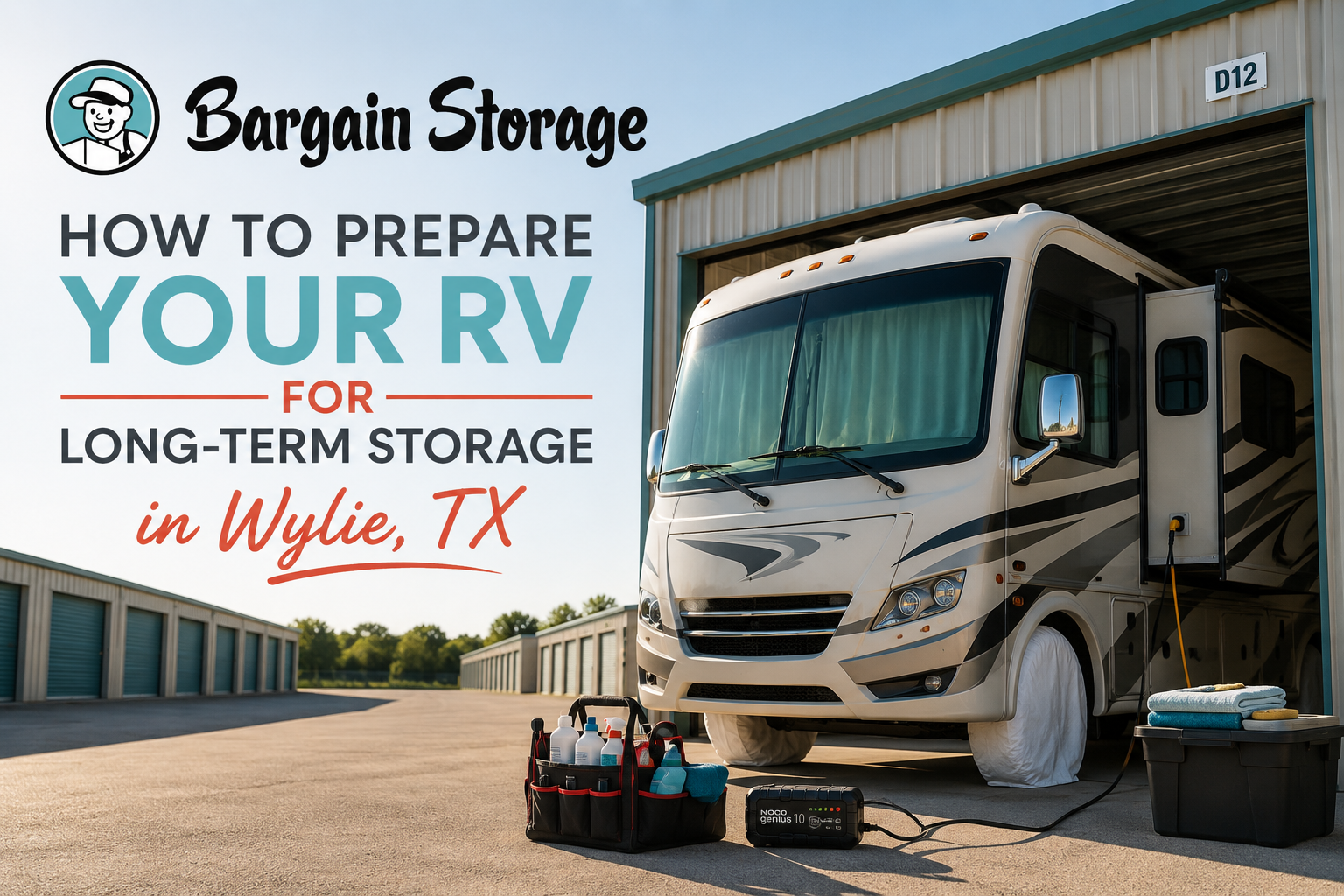
An RV opens up a summer's worth of vacation possibilities, but for months at a time in the fall and winter, it just sits. How you prepare it before it goes into storage decides whether it starts right up in the spring or turns into a weekend of repairs. Texas doesn't get the hard freezes that force a lot of RV owners farther north into a full winterization, but months of North Texas heat, sun, and the occasional cold snap can do plenty of damage on their own.
Here's how to get your rig ready to store, and where to park it in Wylie once it's ready.
Clean It Out and Control Moisture Inside
Clean the inside and outside before the RV goes into storage, not after. Wipe down counters and cabinets, wipe up any spills, and pull out damp towels, blankets, and linens. Loose fabrics that will sit for months are worth vacuum-sealing so they don't pick up moisture or a musty smell. Set a couple of moisture-absorbing tubs or packets, like DampRid, inside the rig itself, with a few more in closets, cabinets, and under the sink. If any moisture does creep in while it's closed up for months, they'll pull it out before it turns into mold or mildew.
Pull anything perishable out of the fridge and pantry, and run the fridge for a day or two beforehand so it's fully defrosted and dry. Check under couch cushions and inside any built-in furniture for crumbs and food, and wash any fabric with food or drink stains before it sits for months. Leftover food is exactly what draws mice and roaches into a parked RV over a Texas summer, and both are far easier to keep out than to get out.
Flush and treat the black and gray tanks so nothing is sitting and souring for months. A full wash of the exterior, top to bottom, keeps tree sap, bird droppings, road grime, and salt from etching into the paint and corroding metal while the RV isn't moving. If the RV is big enough that this feels like a project, a professional detailer can knock it out faster than doing it solo.
Handle the Mechanics, Fluids, Battery, and Tires
If it's a motorhome, treat this part like getting any vehicle ready to sit for a while: change the oil and filter, add a fuel stabilizer to the tank, and check the engine antifreeze. Replacing spark plugs before storage is worth doing too if they're due soon, since it's one less thing to deal with come spring. Procedures vary by make, model, and year, so when in doubt, check with the manufacturer for a full winterizing checklist.
Shut off the propane at the tank, and either disconnect the battery or hook it to a trickle charger. A battery left fully connected for months will drain and can be damaged either way. Top off the tires to the pressure listed on the sidewall, and cover them if the RV will sit in direct sun. Tires lose pressure and crack faster from months of UV exposure than from a single road trip, and replacing four tires costs a lot more than a set of covers.
Drain the Water System Completely
Water left sitting in an RV's plumbing for months is a problem even in Texas, since an occasional freeze can still catch a system off guard. Drain the fresh water tank, water heater, and any waste tanks completely before storage:
1. Drain the bulk of the water using the low-point drains and by opening the faucets.
2. Remove any water filter cartridges.
3. Remove the drain plug from the water heater, fully drain the tank, and replace the plug.
4. Engage the water heater bypass (install one first if the RV doesn't have one) so antifreeze doesn't end up filling the water heater tank in the next step.
5. If an air compressor is on hand, blow out any remaining pockets of water from the lines.
6. Use the RV's water pump to draw antifreeze through the whole system. An RV winterizing kit makes this step easier.
A local RV dealer or service center can also handle this for anyone who'd rather not do it themselves.
Cover It and Protect It from Texas Weather
A Wylie summer doesn't ease up just because fall is on the calendar, and an RV that sits uncovered in that sun for months will show it: faded paint, dried-out seals, and cracked dashboard plastic. Hail is the other risk. A single storm can put more dents in a roof than years of driving.
A quality RV cover fitted to the size and type of the rig helps protect the paint and seals from sun and moisture, though it usually takes two people to get one on a rig this size. Covered or fully enclosed parking removes the guesswork, and the extra pair of hands, entirely.
Choose the Right Spot to Park It
Once the RV is prepped, where it sits for the next several months matters as much as how it's prepped. Wylie Bargain Storage & RV/Boat offers a few ways to park it, depending on the RV and the budget:
• Uncovered parking. The most affordable option, and a fine choice for an RV that already has a quality cover and isn't sensitive to sun.
• Covered parking with power. A roof over the RV cuts down on sun and hail damage, and power on-site makes it easy to run a trickle charger without hauling a generator out.
• Fully enclosed garages with power. Four walls and a door for RVs, boats, or trailers that need full protection from weather and prying eyes, with some units including built-in storage racks for gear.
Rates and current availability change, so exact pricing for each option is always posted on our online rates page.
Wylie Bargain Storage & RV/Boat, at 3151 Parker Rd near FM 544 and Lavon Parkway, is set up for exactly this. Parking is month-to-month with no long-term lease, reservations can be completed online, and every new renter gets a free disc lock. Gates are open daily from 5:00 AM to 10:00 PM, so pulling the RV out for one more trip before the weather turns is never a hassle.
Check On It Every Few Weeks
Long-term storage doesn't mean out of sight for months at a time. A quick walk-around every few weeks catches problems early: a soft tire, a battery that's drained faster than expected, or the first sign of pests. If the RV has a generator, run it for a few minutes on the same visit to keep it from gumming up while it sits.
The Bottom Line
An RV that's cleaned out, drained, covered, and parked somewhere that fits its needs will come out of storage ready to drive, not repair. Sort out the prep now, and the rest is just picking a spot.
If you need somewhere to park your RV, boat, or trailer in Wylie, TX, Wylie Bargain Storage & RV/Boat has uncovered, covered, and fully enclosed options with month-to-month terms and no long-term commitment. Call (972) 442-6747 or reserve a space online.
For more on getting an RV ready for the season, our sister company Carefree Covered RV Storage has its own winterizing guide worth a look.
About the Author: Richard Gastmeier
Richard is the President at RV Part Shop, a leading retailer of RV parts and accessories, truck accessories, marine parts, and outdoor and camping gear, with over 100,000 products. The company serves customers across the U.S. and Canada from 23 warehouses continent-wide.
Storage Tips & Local News | Bargain Storage Blog