
Family Vacation Tips During School Breaks: How to Plan a Summer Trip Without the Stress
Family Vacation Tips During School Breaks: How to Plan a Summer Trip Without the Stress
Bargain Storage
May 29th, 2026
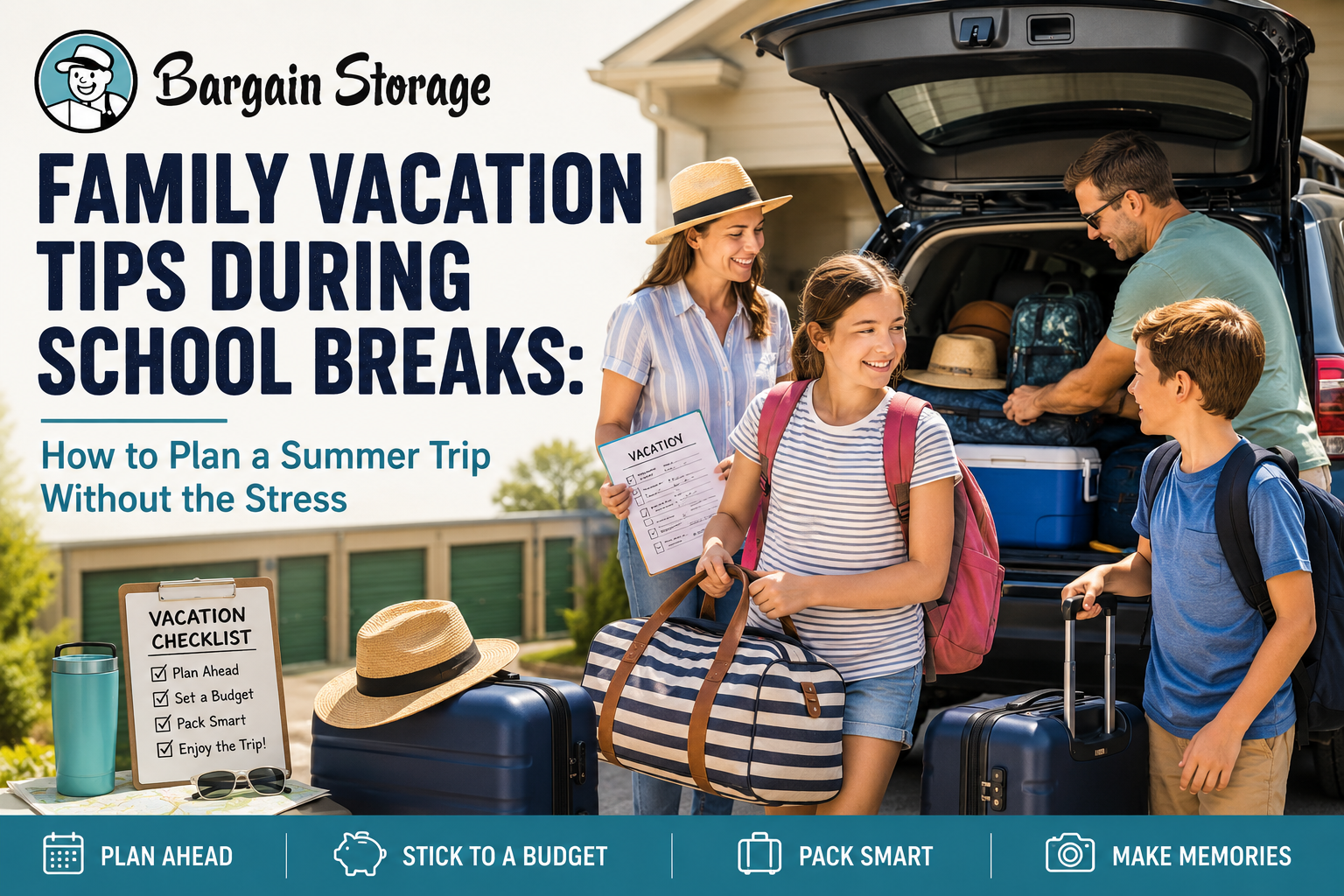
Summer break is officially here in North Texas, and for families in Wylie and the surrounding Collin County area, that means one thing: it’s time to make some memories. Whether you’re hitting the road in an RV, heading to the coast, flying somewhere new, or exploring destinations closer to home, a school break vacation is one of the best investments you can make in your family.
But between coordinating schedules, managing budgets, packing for multiple people, and keeping the house in order while you’re away, summer vacation planning can feel more exhausting than the trip itself, even before you leave the driveway.
The good news is that with the right preparation, you can cut the chaos and actually enjoy the process. Here are practical, family-tested tips to help you plan a summer vacation that goes smoothly from the first packing tape to the final unloading.
1. Start Planning Earlier Than You Think You Need To
If you’re reading this and school is already wrapping up, don’t panic, but do start now. Summer vacations that feel effortless almost always have one thing in common: someone started the planning weeks, or even months, ahead of time. Early planning pays off in a few key ways:
- Better prices. Flights, hotels, and vacation rentals are almost always cheaper when booked in advance. Waiting until June to book a July trip means paying peak-season rates.
- More options. Popular campgrounds, RV parks, and vacation rentals in Texas and beyond fill up fast. The spots families rave about (lakeside cabins, beachfront cottages, state park campsites) often book out by April.
- Less stress on moving day. When your itinerary is set and reservations are confirmed, you can focus on packing and prepping instead of scrambling at the last minute.
If your family hasn’t locked in plans yet, start with one key decision: road trip or fly? That single choice will shape everything else, from your packing list to your budget to how you manage the house while you’re gone.
2. Set a Realistic Family Vacation Budget and Stick to It
Summer vacation spending has a way of creeping far above what families initially expected. The fix isn’t skimping on fun. It’s being specific about where your money goes before you leave. A solid vacation budget should cover:
- Transportation: gas, flights, parking, tolls
- Lodging: nightly rates, fees, taxes
- Food: restaurants, groceries, snacks on the road
- Activities and admission: theme parks, excursions, tours
- Emergency buffer: aim for 10-15% of your total budget for unexpected costs
One overlooked category: home and storage costs while you’re away. If you need a storage unit to hold seasonal gear, clear space for a house sitter, or secure items you don’t want to sit in a car for two weeks, factor that into your planning early. Short-term storage is more affordable than most families realize, and it can simplify your preparation significantly.
For families in Wylie, a climate-controlledunit at Bargain Storage is a practical way to store extra items like sporting goods, camping equipment, and off-season gear before a trip so your home stays clear and organized while you’re gone.
3. Declutter and Organize Before You Leave
Here’s a tip that most vacation packing guides skip: the state of your home before you leave directly affects how you feel when you return.
Coming home to a cluttered, disorganized house after a week on the road is a fast way to lose all the relaxation you built up. A few hours of pre-trip organization can make the return feel like a soft landing instead of a crash.
Before you leave:
- Clear off counters and common surfaces. Put away anything that doesn’t need to be out.
- Do a laundry run. Leave with clean clothes at home. You’ll thank yourself when you get back with a suitcase full of dirty vacation laundry.
- Move bulky seasonal items to storage. If you have winter gear, holiday decorations, or sports equipment taking up floor space, putting them in a storage unit before your trip clears your home for the week and gives you a head start on seasonal rotation.
- Handle perishables. Eat through the refrigerator in the days before departure and do a final check before locking up.
4. Pack Smarter for Families
Packing for a family of four (or five, or six) is a completely different challenge than packing for yourself. Clothes for multiple people, gear for varying ages, entertainment for long drives, and snacks. It adds up fast.
A few strategies that help:
- Use a shared packing list. Create one list for the whole family and check items off together. Apps like Google Keep or a simple shared note work well.
- Pack in layers, not piles. The items you’ll need first should go in last: snacks, chargers, and entertainment on top, not buried under clothing.
- One bag per person. For older kids, give them ownership of packing their own bag (with supervision). It builds independence and cuts down on the sense that everything is your responsibility.
- Don’t overpack clothing. Most families pack twice as many clothes as they actually wear. Three to four days of outfits per person, plus one or two extras, is usually plenty.
- Bring a “car bag” or “travel bin.” A separate tote just for road essentials (chargers, wipes, snacks, hand sanitizer, small toys, motion sickness medicine) keeps the car organized and saves you from digging through luggage at every stop.
5. Plan for the Drive (The Drive Is Part of the Trip)
If you’re doing a road trip from Wylie, you're within a day's drive of the Gulf Coast, Hill Country, New Mexico, Arkansas, and more. Driving is a significant chunk of your vacation time. How you approach it shapes the whole trip.
- Plan stops around activities, not just fuel. Texas has enough to see between Point A and Point B that you can build in stops kids will talk about for years: roadside attractions, local diners, state parks, historic sites.
- Use audio storytelling for long stretches. Podcasts and audiobooks designed for families, like Story Pirates or Wow in the World, make hours disappear. Better than screens for younger kids.
- Rotate “co-pilot” duties. Give one kid at a time a simple job: tracking miles, reading highway signs, choosing the next song, or managing snack distribution. Involvement keeps boredom at bay.
- Build a loose daily structure. Predictable rhythms during road trips give kids (and adults) something to orient around when everything else is new.
6. Keep Important Documents Organized and Accessible
Before you leave, gather and organize everything your family might need on the road:
- Health insurance cards and any relevant medical information
- Prescriptions and enough medication for the full trip, plus a few extra days
- Copies of IDs or passports if traveling out of state or internationally
- Reservation confirmations (hotel, campground, rental car, activities)
- Emergency contacts
Store digital copies of everything in a shared cloud folder. Google Drive and iCloud both work well, so any adult in your group can access what’s needed quickly. A quick scan with your phone camera is all it takes.
7. Secure Your Home Before You Go
Heading out of town for a week or two means your home will be sitting empty, and that deserves some advance thought.
- Ask a trusted neighbor to keep an eye out. Let one or two neighbors know you’ll be away. They can collect packages, report anything unusual, and handle minor issues before they become major ones.
- Set timers on interior lights. A home that looks occupied is far less attractive to opportunistic break-ins. Smart plugs and timer outlets are inexpensive and effective.
- Pause mail and deliveries. USPS mail holds are free and easy to set up online. Packages piling up on a front porch are a visible signal that no one is home.
- Unplug major appliances. Unplugging TV sets, gaming consoles, and other electronics reduces phantom power draw and eliminates any risk from power surges.
- Don’t overshare on social media. As tempting as it is to post real-time vacation photos, consider waiting until you’re home to share the full trip.
If you have valuables or irreplaceable items you’d rather not leave unsecured in an empty home, a storage unit provides an added layer of protection. Items like important documents, collectibles, or high-value electronics are safer in a locked, monitored facility than in a house with no one checking in.
8. Budget for the Unexpected, Because Something Always Comes Up
Even the best-planned family vacation will throw a curveball. A flat tire, a rainy day that forces a change in plans, a kid who gets sick and needs a doctor visit, a hotel that doesn’t match its photos online.
Building a 10–15% emergency buffer into your vacation budget isn’t pessimistic. It’s practical. When something goes sideways and you have a cash cushion, it becomes a minor inconvenience instead of a crisis. And if you don’t need it? You come home with a little extra.
Travel insurance is worth considering for more expensive trips, especially if flights or large pre-paid accommodations are involved. Even a basic policy can cover cancellations, medical emergencies, and lost luggage in ways that protect a significant investment.
9. Make Re-Entry as Easy as Possible
The end of a vacation has a way of being bittersweet, especially if the return home involves unpacking, doing laundry, grocery shopping, and jumping right back into routines.
- Plan an easy first meal at home. Stock a few simple pantry staples before you leave so your first night back doesn’t require a grocery run.
- Leave yourself one buffer day. If possible, plan to be home the day before school or work resumes. A day to unpack, do laundry, and decompress means you walk back into your schedule feeling reset, not ragged.
- Do a quick car unload the night you arrive. The urge to leave it until morning is strong. Don’t. Getting the car unpacked immediately means one less thing to wake up to.
- Help kids transition back. For younger children especially, the shift from vacation mode to school mode takes a day or two. A low-key first evening home with a good meal, an early bedtime, and some wind-down time helps everyone land softly.
Ready to Make Summer Happen?
School breaks are short, and the summers that stick with families are the ones that were actually planned for. Whether you’re taking a quick weekend trip to Lake Ray Hubbard, driving down to South Padre, loading up an RV for a two-week adventure, or flying somewhere entirely new, the same principles apply: start early, prepare well, and don’t let logistics steal the joy from the experience.
If you’re preparing for a summer trip and need a place to store seasonal gear, clear out space, or secure items while your home sits empty, Bargain Storage in Wylie, TX offers month-to-month units with climate-controlled options and no long-term commitment required. It’s one less thing to worry about, and that’s exactly the point.
Storage Tips & Local News | Bargain Storage Blog